


Still life painting was, for most of its history, the least respected thing an artist could do. The French Academy ranked it at the bottom of the hierarchy of genres for a straightforward reason: no people in it. And yet it outlasted most of what sat above it, and it's the tradition behind almost every painted fruit you've ever seen on a product.
Older than you'd guess
The genre reaches back to tomb paintings in Ancient Egypt and to mosaics and frescoes in Greece and Rome — arrangements of food and objects rendered for their own sake.
What arrived much later was the autonomous still life: a painting of objects that isn't a background or a detail in something larger. Jacopo de' Barbari's Still Life with Partridge and Gauntlets, painted in 1504, is among the first. Before that, objects were props. After it, they could be the subject.
The Dutch made it an industry
The genre peaked in the Dutch Golden Age, roughly 1610 to 1680, during which the Netherlands produced up to ten million works of art in a single century. Trade had made the country wealthy, a merchant class wanted paintings for their houses, and artists specialised by subject and even by city.
The subgenres are specific enough to be worth naming. Ontbijtjes, breakfast pieces — bread, cheese, herring, a pewter jug, in a limited earthy palette. Pronkstilleven, ostentatious still life, piled with rare imported objects and expensive dishware. Floral pieces, especially in Amsterdam. Fish, especially in The Hague, which was a market town.
Here's the detail that reframes the whole genre: these paintings were status arguments. A lemon from the Mediterranean, sitting beside a twisting jug of Venetian glass, is telling you the owner's household reaches that far. The fruit is a flex about trade.
Vanitas, and its built-in contradiction
The most loaded subgenre is vanitas. The word is Latin — vanus, meaning both empty and frivolous — and it comes from Ecclesiastes. The paintings pile up skulls, guttering candles, wilting flowers, hourglasses and musical instruments to say one thing: everything here is temporary, including you.
Leiden became an early centre for it, home to a theologically significant university, and painters including Harmen Steenwyck, Pieter Claesz and David Bailly worked the form. Clara Peeters is among the notable names, painting these compositions in the early 1600s.
The contradiction is the interesting part, and contemporaries would have felt it. A vanitas painting condemns attachment to beautiful worldly things while being a beautiful worldly thing, commissioned by a wealthy person, hung in an expensive house, and later sold at auction for a great deal of money. The genre denounced exactly what it became.
Why fruit specifically
Painters returned to fruit constantly, and not by accident. It presents every technical difficulty at once: translucency in a grape, a waxy sheen on a lemon skin, matte bloom on a plum, the wet interior of anything cut open. Rendering those convincingly is a demonstration of skill that needs no explanation to the viewer.
And fruit is temporary in a way that a jug isn't. A painted peach is at its peak for a day. That built-in impermanence is why fruit carried the vanitas message so efficiently — the subject makes the argument without needing a skull next to it.
The rescue
Vanitas lost its commercial pull by the end of the Golden Age, as the religious fervour behind it faded. What survived was the visual approach rather than the moral.
Then in the nineteenth and twentieth centuries Cézanne and Picasso picked the genre up for entirely different reasons. Not symbolism — formal experimentation. Apples and bowls were useful precisely because they carried no narrative weight, which left the painter free to work purely on colour, geometry and how form sits in space. The genre's lowly status turned out to be a licence.
Where this ends up
Our Fruit & Nature collection sits directly in this lineage, and knowing the history changes what the designs are doing.
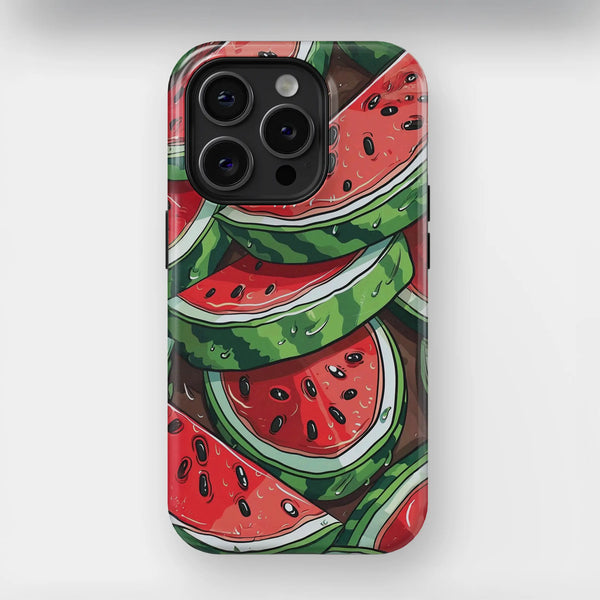
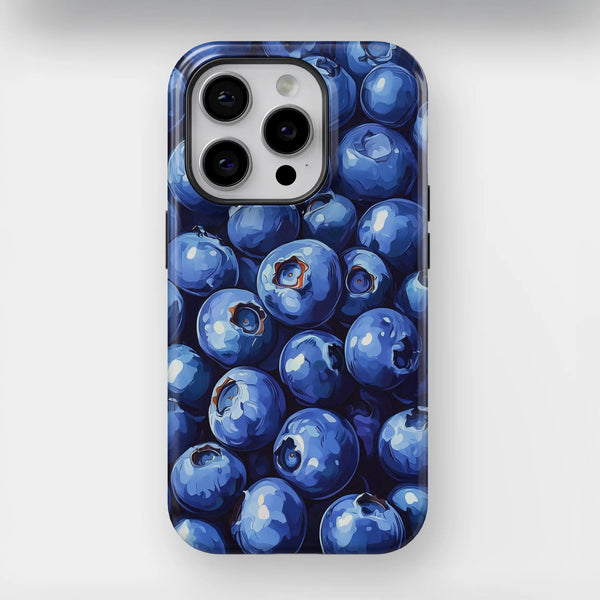
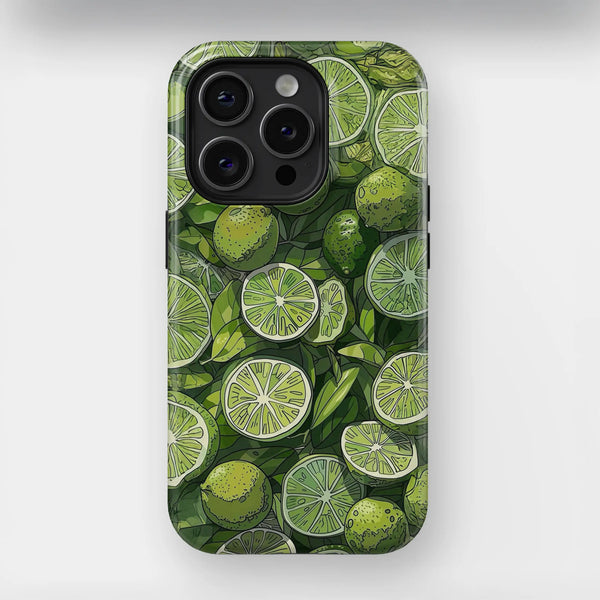
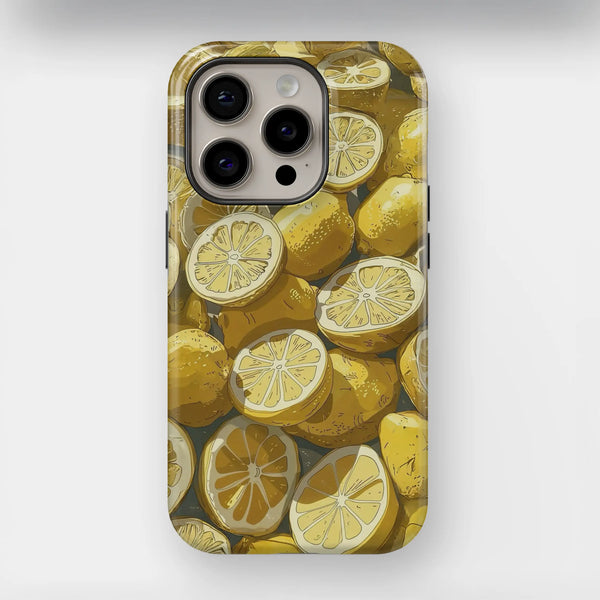
Lemon Art is the most loaded object in Dutch still life, painted for its skin texture and its meaning about reach. Watermelon takes the cut-open approach — the wet interior that painters used to prove they could handle a hard surface. BlueBerry works the deep-tone, close-observed end, and Lime and Kiwi take the citrus and cross-section route.
There's a neat symmetry in where they've landed. Still life was the genre for objects rather than people, ranked lowest because it was ordinary. Putting it on the most ordinary object anyone owns — the thing in your hand two hundred times a day — is arguably the most appropriate destination it has ever had. The scientific cousin of this tradition is covered in botanical illustration.
FAQ
What is still life painting?
A genre depicting inanimate objects — food, flowers, everyday items — as the primary subject. It goes back to Ancient Egyptian tomb painting, though the independent still life emerged around 1504.
What is vanitas?
A still life subgenre using skulls, candles and wilting flowers to represent life's brevity. The name comes from the Latin vanus, meaning empty or frivolous, via Ecclesiastes.
Why was still life considered a lesser art form?
The French Academy ranked genres by subject, and still life came last because it contained no human figures. Its lack of narrative later made it ideal for formal experimentation.
Why is fruit so common in still life?
It offers every technical challenge at once — translucency, sheen, texture — and its impermanence carries meaning about transience without needing further symbols.